Overview
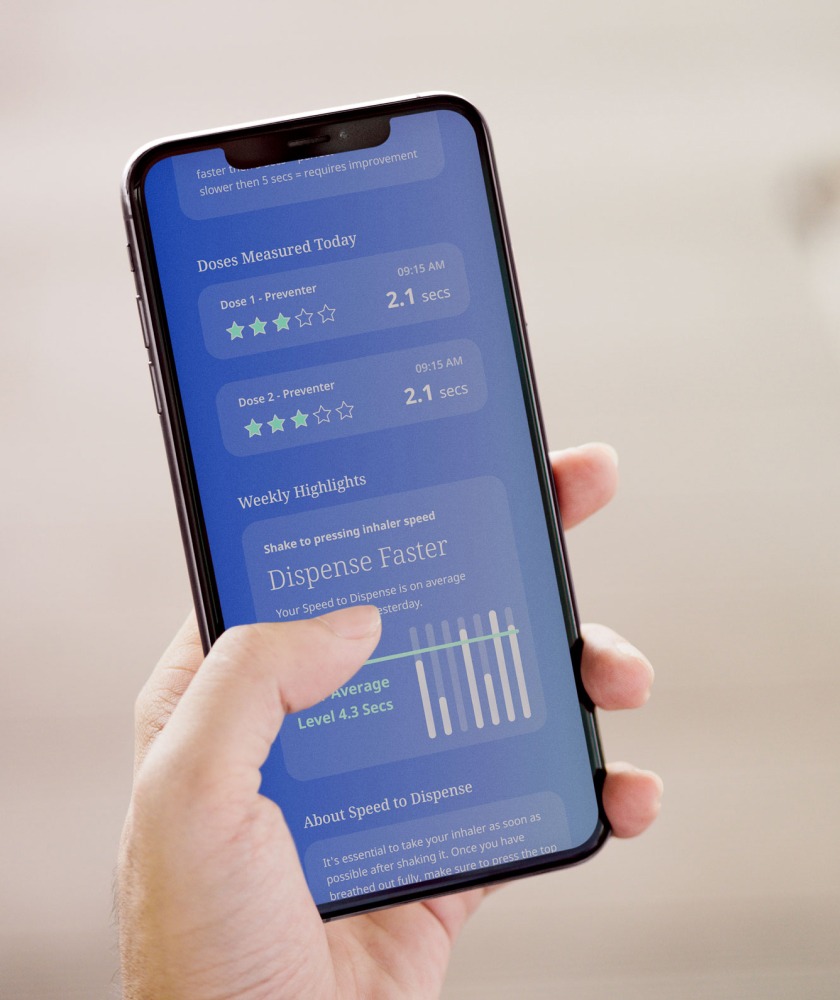
By 2025 asthma is predicted to affect over 400 million people worldwide and by 2032, COPD is predicted to be the world’s leading cause of death. Meta-analysis has concluded that 86% of inhaler users make at least one inhalation error daily and that 50% experience a critical error leading to poor symptom control, increased risk of hospitalisation and a higher risk of mortality.
The Challenge
The problem was clear but complex:
- 86% of inhaler users make at least one error daily
- 50% experience critical errors affecting their health outcomes
- Poor symptom control leading to increased hospitalizations
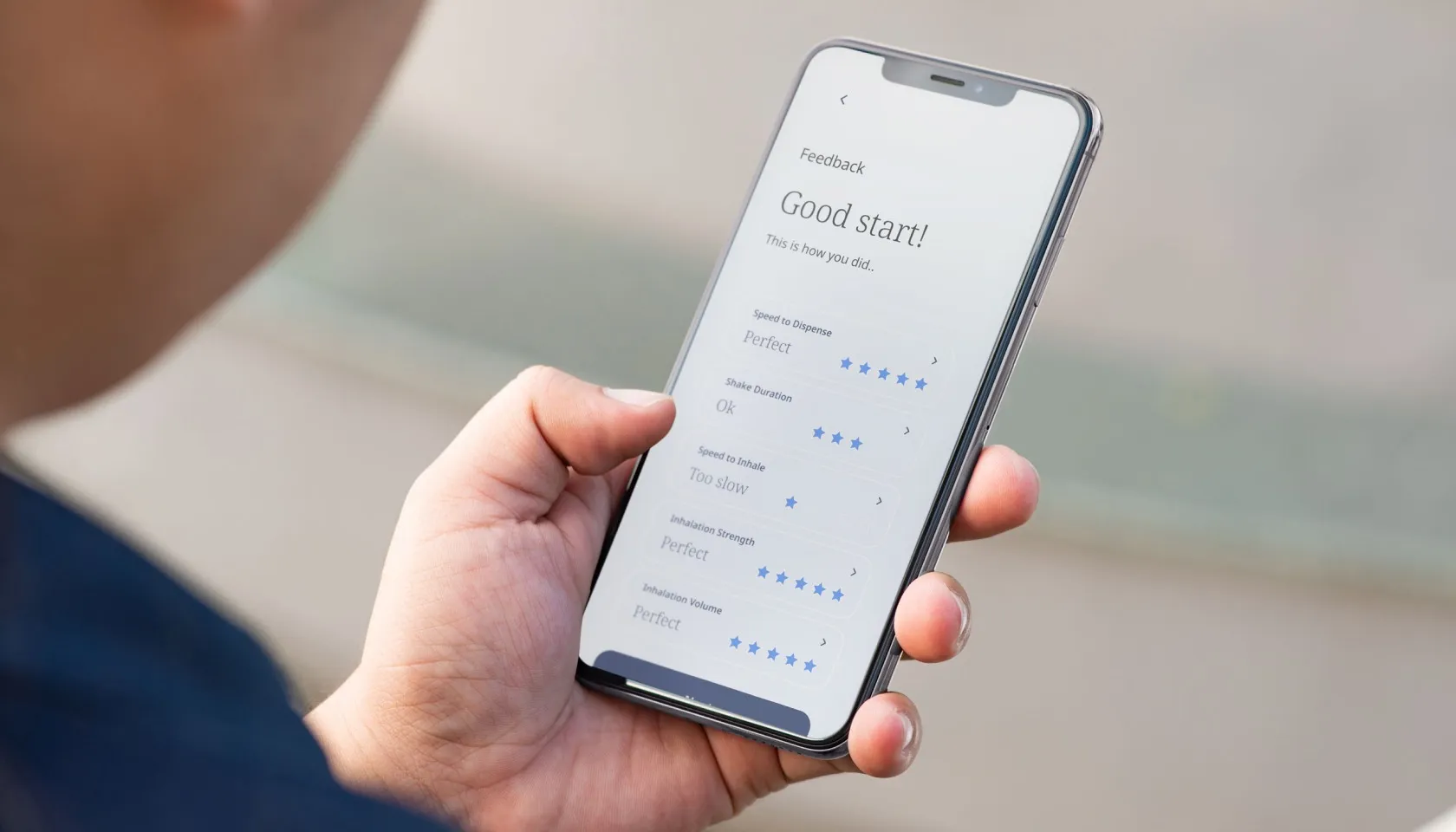
- Need for both patient education and clinical data collection
- Balance between app-guided usage and independent device use
Process
Sprint Methodology
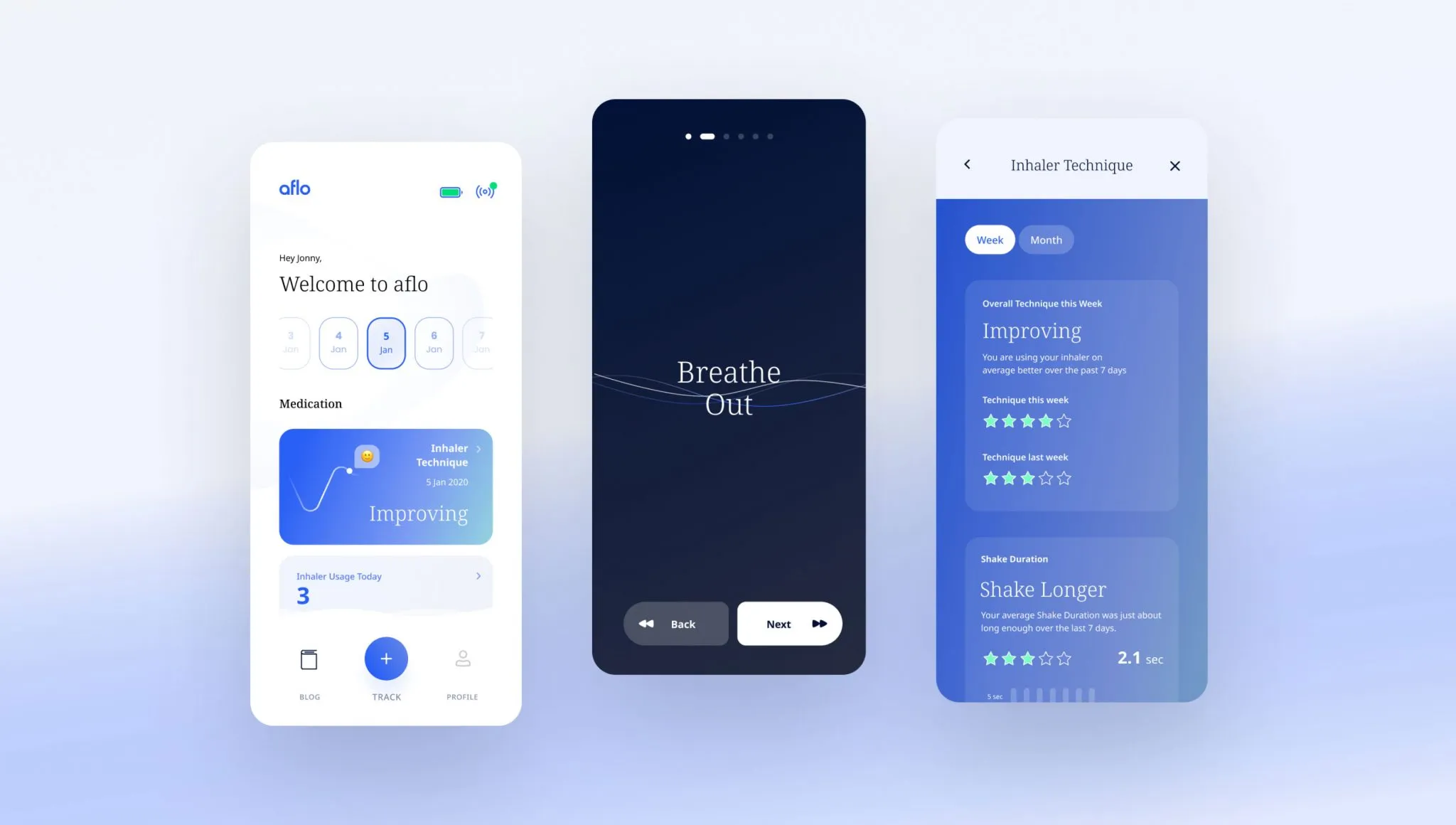
Using a ‘sprint’ design methodology, we quickly generated a prototype with features we wanted to test with users. We conducted wireframe testing and pulled some interesting insights. The overall concept was validated, although some testers mentioned how they would like to use the product without the app every time plus the ability to manually upload a session.
Key Insights from Testing
- Users wanted flexibility to use inhaler independently
- Manual session upload was important for user autonomy
- Instructional content needed to be clear but not patronizing
- Data visualization should motivate, not overwhelm
Approach
Taking this feedback onboard we developed a full design system and UI architecture so the development team could build and deploy the app.
Design System Development
The design system was built to:
- Enable rapid iteration based on developer feedback
- Maintain consistency across user flows
- Support both guided and independent usage modes
- Scale for future features including clinical dashboard
Collaboration
I then handed over the design reigns to another designer, who used my design system to build a clinical dashboard (with my feedback). This demonstrated the robustness and flexibility of the system architecture.
Solution
I designed an award-winning user experience to both encourage better inhaler usage with both instructional content design and data analytics.
Key Features
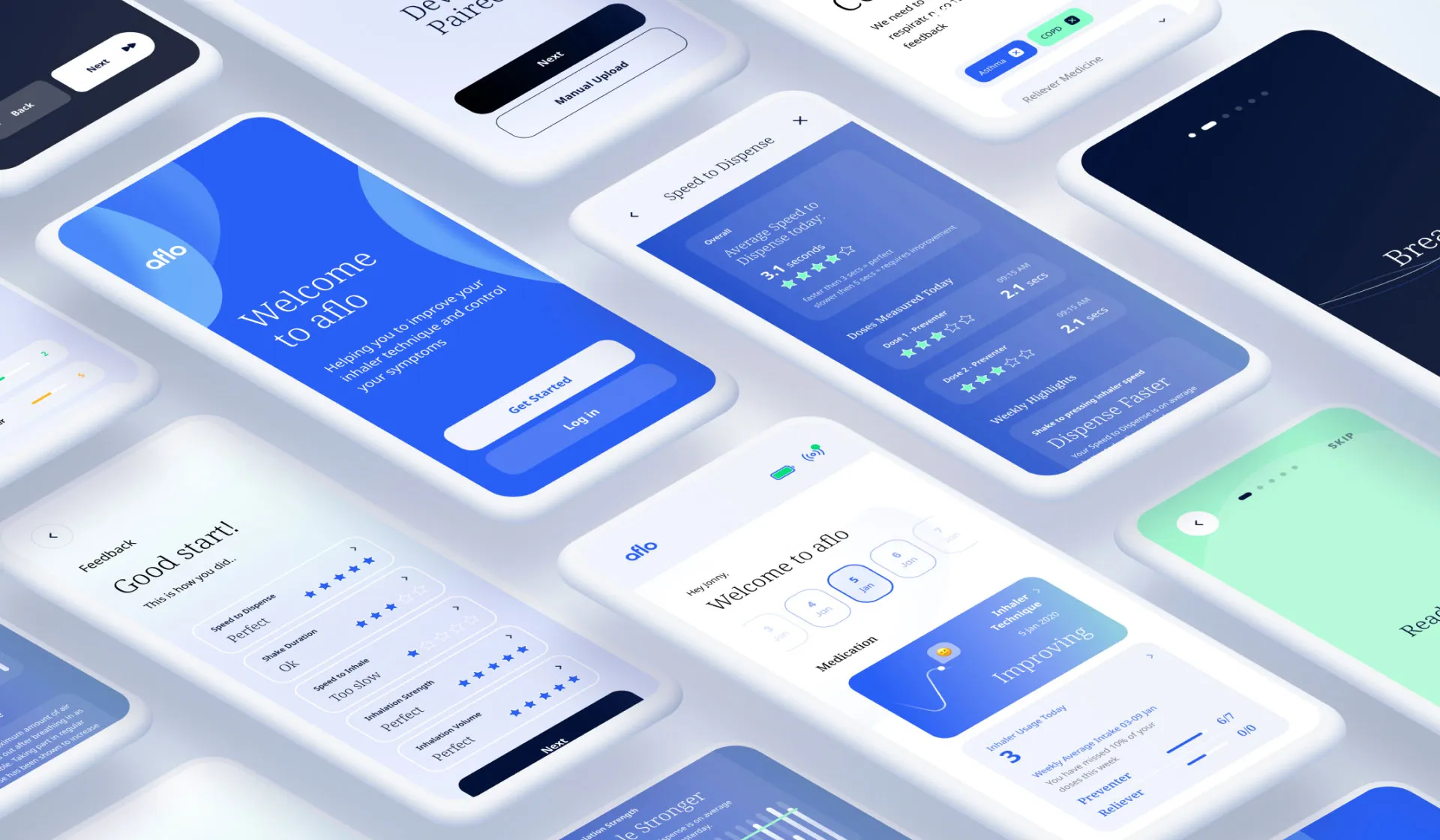
Behavioral Nudge Techniques Using subtle behavioral ‘nudge’ techniques was a key part of the success and allowed us to design a solution that will hopefully lead to behaviour change with positive health outcomes.
Technique Coaching Step-by-step inhaler technique guidance with visual and haptic feedback to ensure proper medication delivery.
Usage Tracking Daily tracking of inhaler sessions with the ability to manually log when users prefer independent use.
Progress Visualization Motivating data displays showing technique improvement over time, encouraging continued engagement.
Clinical Integration Data collected feeds into clinical dashboards, enabling healthcare providers to make more informed treatment decisions.
Impact
The app creates a simple experience that bridges the gap between patient behavior change and clinical decision-making, with the potential to significantly improve health outcomes for millions of people living with respiratory conditions.
Recognition
- IDI Awards 2022 - App Design
Design Principles
The project exemplified my approach to health-focused design:
- Empowering users while collecting valuable data
- Using behavioral science to drive positive outcomes
- Creating flexible systems that adapt to user preferences
- Building design systems that enable team scalability